Showing posts with label run. Show all posts

Tuesday, October 29, 2019

2019 IRONMAN Malaysia Race Report

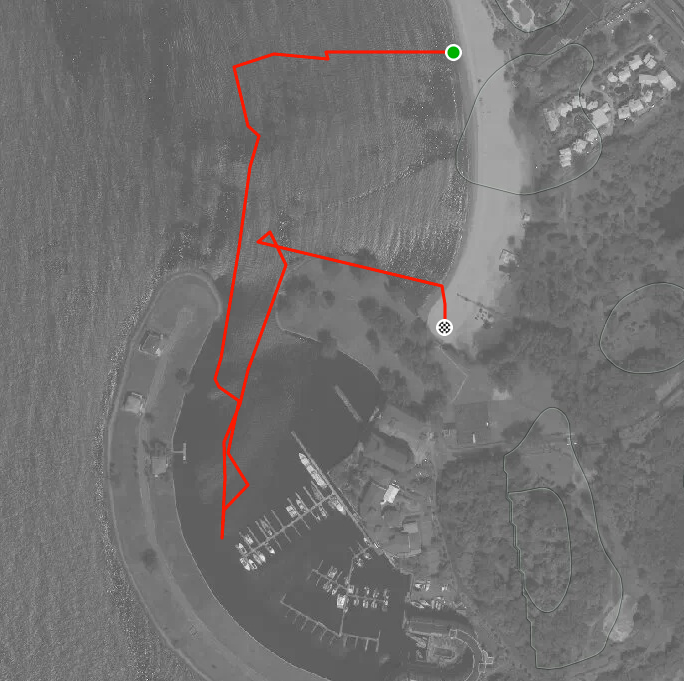
A sharp, stinging pain coursed through my wrist as it seemed to get tangled in a long hair. As my arm pulled my body through the warm water it swatted what had to be a jellyfish tentacle across the tip of my nose and down my torso. The pain continued on the back of my right leg and ankle.

I was only about 200m out from shore in Langkawi, the day before the full Ironman. The sun had just risen and although the sky was threatening rain, the water was calm and conditions looked good. I was doing a warm-up swim just to check the conditions and prepare myself for the race the next day.

90 minutes later, I felt considerable abdominal pain, but whatever, these thing can come and go. There's no way that could be connected to the stings. They still burned, too, but I knew those would eventually go away. I was on my bike, doing an hour-long ride.

After the ride, I returned to my hotel room and Googled "jellyfish sting treatment" and "jellyfish sting symptoms." I had already poured vinegar on the wounds, but was surprised to see that abdominal pain (along with death) could be attributed to the stings.

Soon after, I was in a van with seven other guys from Singapore, Terai Melayu. We were checking in our run bags and later would be racking our bikes. But by then, the pain had become so bad I let them know I thought I should go to a doctor.

All the clinics were closed from about Noon to 3. One of the guys called one and when told they were closed, he said, "What happens in an emergency?" "Just wait," he was told.

My bones ached and it felt like I had a severe fever and influenza.

So we made our way to the only hospital on the island, and they checked me in at the emergency room. Within 10 minutes a doctor was asking me questions and within no more than 15, I had my pants down with a needle full of Voltaren being injected into my right-rear. 30 minutes later, I felt 50% better and was waiting to pick up my medicine from the pharmacist.

---


My mind was more at ease than usual as I had a thorough packing list and my gear was well-organized. I wouldn't forget a thing. The hilariously-huge hotel room gave me plenty of space to get organized.

I would have run laps in this room, but my training was over.
Most dominating, however, wasn't any pre-race jitters but the incessant shooting pain in my toes especially. It was 4 am and I don't think I had slept for more than 15 minutes straight the entire night. Each pain felt like a fire ant or maybe a quarter-bee-sting. I kept putting hydrocortisone on the jellyfish stings until I realized the pains were coming from within, not from the skin.

"Don't worry," I told my half-sleeping wife. "If it gets too bad I'll just quit. I have nothing to prove. I've done this race before. Let me see how it goes."

Throughout the night I was 50-50 on whether or not I'd even start. But this sport is all about taking tiny steps, one-by-one, and moving forward. Don't ever think too far ahead.

But 100% of the groundwork had been done for me: The training, the logistics, the check-in, everything. It would be insane to throw in the towel now.

The electric environment at the beach had dramatically lifted my spirits. Pete Murray's voice accompanied by Chirs McCormack's worked the crowd into a near frenzy as Javier Gomez, Andy Potts, and other pros started their swims. I was feeling great, and there was no way I was going to back out now, despite those annoying pains in my body. But if I felt the pain worsen or become a danger, I'd have no qualms doing my first DNF.

It was only 38 min and a few seconds before I had finished the first lap of 1.9 km - my goal was 38. So now I only had to do it again. All the swim squad training I had done for the past nine months had really taught me the meaning of speed. I used to think speed would come from a stronger but fewer pulls (lower cadence). Wouldn't this be necessary to save energy over 3.8 km?

Except I knew my coach had been telling me the opposite for years. I just must not have believed it would be the case for an unconditioned beginner like me.


But then my friend Andrew had been telling me the same thing since March. He had just done the Roth swim in 56 min I believe, Norseman in 52, and Kona in 57 - all in the last four months. "Don't make this like some Sunday swim. Put some aggression into it," he kept saying.

In the swim squad many of the sprints we do end up being races. And that's where I figured out that the #1 way to be faster for me was just to crank up the cadence. So I remained mindful about this most of the time, not letting my thoughts wander. Cadence up!

As expected, I came out of the water in 1:18-something, just a few seconds over what I wanted.

"You've done this race before. You know what to expect. Race smart - write it on your arm," Andrew told me.
I was far more comfortable on the bike, and very much more in control. I pretty much knew what to expect, having done this course the year before, despite minor route changes. I was hoping for an Intensity Factor (IF) of 72-73 (% of FTP). I kept it near this figure up to about the 45th km, but then it started slipping.

By the second lap, I noticed my wattage was down to around 64% - very low - yet my average speed was around 31-32 km/h, which was my target. So no point expending unnecessarily energy. I needed to save my legs for the run, and if my IF was to be so low, so be it, if my speed was acceptable.

However, I did get spooked by a Variability Index reading of 1.09. That meant my Normalized Power had a 9% variance over my Average Power - too many spikes, too many matches burned. 1.05 is usually regarded the limit, but with such a hilly course it's understandable that it could exceed this.

I was nicely fueled up, though. My wife had mixed up a veritable gravy of nutrition. 1,452 calories, 308 carbs, and 5,340 mg of sodium (the recommended daily allowance of sodium for adults is 1,500 mg) in a single bottle. The stuff was so thick and rich it burned going down. The consistency of pancake batter.

It's absolutely essential that you chase it with copious amounts of water or else it will dehydrate you quickly by pulling water out of your cells into that solution in your stomach as the tonicity concentrates homogenize. Drinking water makes it isotonic - meaning the same concentration as your cells.

Plus another 8 Hammer gels, or another 720 calories, for good measure.

It had rained a few times a day for the past week or so, and we were all hoping for some afternoon showers to cool us off. It never came. The ride just got hotter and hotter.

It was otherwise rather uneventful. We passed through a small wedding happening on both sides of the road, in front of villages and kampungs with kids running wild asking for water bottles, and across intersections dutifully manned by local police in the scorching sun.

Thanks for the photo, Nik.
I normally am quite social on the bike and the run, but this time chose to focus more on my own race, and keep to myself. I saw Vignesh again, the same guy I met at the same time and same place and same race as last year. A while later I met a fellow-Oregonian, Bryce, too. Funny we were all three on Canyon Speedmaxes.

But I largely kept to myself, trying to focus. "Race smart," my arm read.

At about 173 km there was a poorly-marked right turn which I almost didn't see. I looked forward and noticed two course attendants suddenly jump up when they saw me and the guy in front of me arrive. They quickly indicated the direction they wanted us to go.

The cyclist in front swerved hard at speed, causing him to flip and face-plant. The road was especially rough at that point. This would have been disastrous for him, but I didn't stop as there were guys there with radios and a vehicle. Anything can happen.

I was happy to get off the bike. The new Hoka Bondi 6 shoes I was wearing were a true luxury. It felt like I was walking on pillows. As usual, the first few kilometers were easy. 3 1/2 loops from the exhibition centre to the Meritus is all we had to do.

At about my third or fourth kilometer I saw Javier Gomez running the other way. He must have had about 12-14 more to go. I had wished him 'buena suerte' at T1 before the swim, and he was friendly enough. I thought I'd keep my mouth shut this time and let him do his job, even though second place was so far back it was at least five minutes before I saw him.

The road we were on which followed the airport runway was so similar and boring that it really got old fast. No variety. Total monotony. But in a way that also made it seem shorter, because we saw fewer things.

My first dozen km were okay, to plan. Then things started falling apart. The usual boost of seeing my family helped a bit, but on the second loop I actually stopped to hug them. I was slowing down.

We'd pass by the finisher chute two times before entering it (so a total of three). My first time, I faked like I was about to finish, which would have placed my among the pros. People laughed as I pretended to head in, but took a sudden left turn down the 'next lap' route. If only.

The blue wristband shows I was on my second lap.

My training runs were solid. I was able to do 20 km bricks in 1:45 after 150 km rides. I nailed some good long 30 and 32 km runs. But just like last year, I wasn't able to hold it together at the race.

Well why not? I didn't overdo the bike. I had a new nutrition plan, and felt satiated and hydrated. I had tons of sodium. I was drinking about 200 ml of water at every aid station. I wasn't cramping. My mind was clear.

I could feel the run slipping away, and wanted to quit. Kilometers 19 to 37 were a real horrorshow. But then I had had enough. I was mad at myself. Why did I let this happen? What happened to "race smart"? I looked down at my arm to see that the permanent marker had worn off.

"Just run, that's what you do," I convinced myself, and I resolved not to finish until it was over. And so I did.

The best feeling, as usual, was my wife and kids' cheer at the finish line. That was tempered by my realization that the time I had 'achieved' was worse than last year's, despite my superior training and planning. But still, I had done it.

Jellyfish woes long behind me, I had other aches and pains that would be easily solved by a nice cheeseburger and a long night's sleep.

Sunday, September 9, 2018

70.3 Run Analysis Chart

I was pretty happy to set a personal best for the run at the 70.3 World Champs in South Africa.

Previously, my standalone-half marathon personal best was 1:43. This was done in the tropical heat of Singapore. I had tried to beat it a few times in similar conditions but both times only achieved 1:44s.

So how did I hit a 1:38 after the swim and ride? The obvious answer was that I benefited from the cooler weather and of course more training.

But to be sure, I did an analysis of my past five 70.3 runs.

Objective:
Determine why my WC run was so much faster than my previous personal best.

Hypothesis
The run was fast due to the cool weather and my bigger base of training, which included speed work.

Items to look for
  1. Do the VIs from the bike leg prior have any affect on the run?
  2. Was there any correlation with heart rate?
  3. How did the CTL, ATL, and TSB affect the run, if at all?
  4. Did nutrition play a role?


In the chart above (broken up into two for easier reading) it is clear that the variable contributing most to the faster run, is indeed the weather.

I can't find any correlation between other items (see list above).


Definitions
RPE: Rate of Perceived Exertion, on a scale of 1-20. 20 = being so hard that you leave nothing in the tank. Basically, you are in a world of hurt.

HR: Heart rate

VI: Variability Index. This shows the smoothness of your power output on the bike. It is calculated by dividing Normalized Power by Average Power. A VI of 1.05 is considered the highest acceptable for the ride segment of a triathlon. Anything higher shows that you 'burned too many matches' or made too many power spikes, which will detract from your run.

CTL: Cumulative training efforts over the last 42 days. The higher this is, the more trained you are.

ATL: Fatigue over the past week.

TSB: Form. TSB = yesterday's fitness - yesterday's fatigue. The higher this is, the more rested you are.

Sunday, December 4, 2016

The North Face 100 Race Report - 50k Trail Run in Singapore

There are two kinds of races. One is the kind where you train for months on end, with a devoted, almost religious fervour, and the other where you, uh, don't train.

With the first type of race, the endless pre-dawn hours of solitary drills creates and investment that is hard to quantify. This investment can be so huge, both physically and emotionally, that the stakes come race day are as high as ever. It all comes down to that event, and if anything goes wrong, the loss can feel catastrophic. But if everything aligns and goes your way, you're set for a personal best, and it will all be well worth it.

With the second type of race, there are really no pre-race jitters or much to worry about. You've invested nothing, and you're at the casino rolling the dice with hardly any investment to lose, so no sweat. But you're not going to win big either. It's like you're playing the penny slots as far as the win is concerned. And although you won't lose your capital, you will experience quite a lot of pain.

At this year's TNF I fell squarely into the second category. No training to speak of, no real commitment, no real race goal in mind...and frankly no way to get through this damn thing without enduring a world of hurt.


For the past few years I have done the TNF 25, and loved it every time. It's well organised, has great volunteers, excellent food at the finish (Subway sandwiches and ice cream), and is one of the only major trail races in Singapore. And for those prior years, I had trained beforehand.

They call it TNF 100, but there's not actually any 100km category. I believe there was a 100km category in previous years, but the closest we get to 100km now is the 50km duo category (50 + 50). And while I had done pretty well in the 25km category in the past, and 25km is a palatable distance, I decided I wanted to take it a step further.

I signed up for the 50km, excited to see just how hard this would be, and to push my limits of distance and endurance into new territories. Thing is, it was already October and the race was the end of November. I had no time to train, and was just coming back from a year-old torn plantar fascia on the left and a worsening impinged anterior tibiofibular ligament on my right.

On top of that, I had ever done anything past 42km, so not only was a unprepared physically, I lacked the experience of an ultra.

But I told myself that if I could finish the Newton 32k race in a respectable time (which I did, at a pace of 6:04/km) I'd be alright and I could probably do 50km a month later. So I signed then with a month to go. I didn't really train, because what can be accomplished in a month?

My plan to finish was to eat regularly and keep my heart rate low so I wouldn't ever go anaerobic. You only have 2-3 hours of glycogen in your body, which is the primary source of fuel for your body at high effort. But if you keep your heart rate low, you can extend that. Consider that you would be able to walk all day (10+ hours) with no training, as long as you didn't get your heart rate up too high.

I had set my Garmin Fenix3 HR to alert me if my heart rate went above aerobic. I also put a timer alert to ring each hour to remind me to eat. I packed quite a lot of Clif Bars and gels - bonk insurance - or so I thought.

Does it look like a lot? It was.
My packing list included:
  • Visor
  • Sunglasses
  • Garmin Fenix3 HR
  • Heart rate monitor
  • Lobo CamelBak
  • Safety pin to pop blisters
  • Alcohol swab
  • iPhone 7 Plus
  • Selfie stick
  • Route map
  • Sunscreen
  • Tom's Sports Shield
  • Extra socks
  • Race belt with bib
  • 1.5 litres of water
  • Buffet of gels and other assorted nutrition
  • $50 (just in case)
  • New Balance road shoes

The Event
The race started at 7am at MacRitchie Reservoir, right in the heart of Singapore's considerable jungle. The race materials instructed us to arrive at 6, but due to my nervousness and fear of being late, I was there at 5:30. Nobody else was there. And I mean nobody. Even at 6, at the starting point, I was alone. I was waaay early. A few familiar faces appeared, including the ever-cheerful Fuse Lee.

Pre-dawn wefi with Fuse
But quickly the area filled up. And after the race officials weighed our packs to make sure we had 1.5 litres of water or more, we proceeded into the starting pen. At that point, Singapore Blade Runner was there, as usual (he's a TNF Ambassador) and he interviewed me and others on his phone, which would later be posted online.

The countdown came and went, and we were off. Down the paved sidewalk, around the reservoir, and soon into the trees. The sun was just coming up, and it was a great feeling to enter the jungle just after dawn. The trail was damp from heavy rain the night before, but there were no major puddles or mud pits like I had hoped for. (It's fun!)

Along the way, I shot footage of the race on my iPhone - you can check out the full video above.

The first few kilometres take you up and down undulating hills that are fairly well-trodden: A mix of gravel, small stones, and the occasional root. Nothing too tricky or technical.

With my plan to keep my heart rate so low, I had people passing me left and right. Now I'm not that fast but I'm usually in the top quarter or better and it was a bit of an unsettling feeling. But my watch just wouldn't shut up.

I trudged along, at about 7-8 minutes per km, waiting for the crowd to thin out and to settle into a rhythm. Soon enough, we hit the first aid station where they served us cold water and Plenish. This was the first time I had tried Plenish, but it was pretty much the same as the Pokari Sweat - non-carbonated, and easy to go down. This first water stop was right at the paved road by the golf course at the end of the fourth km.

From there, we headed deeper into the jungle, over a stream (yes, a stream in Singapore), and up towards Rifle Range Road. I thought the ascent up to Rifle Range would be very slippery and muddy, but it was fine, even in my well-worn road shoes.

After one hour, my watch beeped, reminding me to eat something. I ripped open a Stinger gel and a Carman's bar. I found that they have the perfect 5:1 ratio of carbs to protein, supposedly the optimum combo for endurance sports.

Along the way Fuse and I met up and we chatted and joked.

"It's hard to keep this pace," I complained, knowing he's done multiple ultramarathons.

"I know what you're doing," he replied. He was doing it too, pacing himself for the impending pain.

Fuse knew how I had over-packed gels and food and joked about it.

"I'm going to 7-Eleven later," he warned, eyeing my pack.

"Then I'm going to pick up the pace with you snapping at my heels," I replied. This is the guy who usually wears a shark hat to races, which now started to make sense.

Up the paved Rifle Range Road we proceeded, fast-walking when it was too steep, speeding it up on the flats and downhills. We both felt fine and were about to be greeted with another water stop - right and the junction of Rifle Range, the Durian Trail, and the edge of the Bukit Timah Trail.

Two loops of this. Starting from the East. The loops around Bukit Timah are clockwise.

Our course would enter the Durian Trail, circle around the Bukit Timah hill, and eventually come out on the other side of the road, from Bukit Timah.

I was carrying a 1.5 litre hydration pack, which honestly was too much, despite the usual heat and humidity. I don't think I ever even drank half of it. At each water stop I drank the Plenish they had there for the electrolytes that water can't provide, and only twice did I refill my only half-empty pack. So if you're conditioned to the climate here, don't worry about 1.5 litres not being enough. It's plenty.

The Durian Trail was a stretch that we did in previous years (so in 2017 and beyond I'd expect it to be kept). It was the most technical part of the course mainly due to the large roots and a few short stairways. I know how badly a sprained ankle can ruin your day so I took it easy here.

10k into the race, at the end of the Durian Trail, crossed Rifle Range, entered the Kampong Trail, and finally came out near Hindhede Dr, near the carpark at the beginning of the Bukit Timah mountain bike trail.

This is where the trail gets a bit boring, but technically easier. We entered the Rail Corridor (former train tracks) which is a raised and flat section that continues 1.5 km down towards Rail Mall. While easy, it's also sunny as there is limited cover from trees.

I was still feeling really good at this point, which was nice because we were about to attack a long uphill section behind Rail Mall. The only consolation is that it's paved, making it much easier, but borrr-ing.

Eventually, we found ourselves alongside Dairy Farm Road, where there was another aid station set up. This was about 14.5 km into the course. They had water, Plenish, and bananas. At this point I saw Norhazry Johari, from Terai Melayu, and Fuse met a few other guys he knew. He took a break and I pushed on.

From here, the course took us past the Dairy Farm carpark, up the paved walkway, and into a short stretch of the Bukit Timah mountain bike trail, to Belukar. My average pace was still about 8:15 per km, and my heart rate was acceptably low, only peaking every so often. I felt great.

Right after Belukar, the trail opens up to the area along the pipeline, with no trees. Despite there being no shade or shelter, there were medics along here, dutifully observing runners and ensuring our safety. Up and down, mud and grass. Repeat about three times. Now you're back out at Rifle Range, right at the entrance of the Durian Trail.

Along the pipeline area, just outside the Bukit Timah MTB trail, there were some nice puddles
Although this was only 17km into the race, by this point, we had covered the entire course. This was different that past years, in which the course stretched out up to T-15, crossed Mandai, and entered Lorong Asrama and the Pengsan Hill area.

Many runners were disappointed with this change of course, as most feel that multiple loops of the same course can be boring or emotionally harder to palate. There was also a stretch on this course, at the halfway mark (25km) which was an out-and-back, which gave us the opportunity to see who was ahead (and behind).

I ran pretty much alone from km 17 to the starting point at 25, and still felt okay. But it was hard to eat every hour, on the hour. I had absolutely no appetite. My stomach felt fine, I had plenty of water, so I didn't force myself.

It must have been at km 21 where I saw the leader pass me. I did the math in my head: 21 plus 4km to the u-turn, plus the 4 back to here equaled 29km. So he was 8km ahead of me. And soon, as I made my way toward 25, more and more passed me.

Before I knew it, the trail was overloaded with runners, wearing the 13km and soon the 25km bibs. There were hundreds upon hundreds of them, taking up most of the trail, making it very hard to get past in some instances.

Most were very polite and accommodating and allowed us 50 km-ers at least a narrow spot to squeeze through, but not all. I had quite a few slam into me, one hitting so hard I'd be surprised if he didn't get hurt (he was just a little guy).

I also recognised a few faces, exchanging high-fives with a few guys, including Blade Runner. Just a few minutes after the u-turn I saw Fuse, probably less than a kilometre behind me.

By this time, the trail had thinned out, with the other categories of runners well ahead of me, and fellow 50 km entrants pretty well spread out. My pace was slowing, and I could tell it was going to be hard to maintain anything below 8:30 or even 9 minutes. At least I had just run this trail, and knew exactly what to expect for the second half of the race.

I knew I was entirely capable of running a good 25 or even 30 km at a decent pace, but what lay ahead of me I was not prepared for. They say that running a marathon is all about the last 10 km, and that anybody can make it to 30 or 32. It's no coincidence that this is where your glycogen runs out and you hit the wall, if you haven't trained properly.

I told myself that it wasn't that bad, and that I wasn't bonking, but I was. My food tasted worse and worse. The simple act of chewing became a monumental feat, until I would soon give up.

At 4 hour and 44 minutes I had just passed the Rifle Range aid station and was just about to enter Durian Trail again, just starting km 33. I had my phone on my and figured I'd give a call to my parents, in the US.

"Hello, have you finished your race?"

"Hey, no, I'm running right now," I replied, wondering if they could even hear me over their loud background. They were having a nice dinner in an Italian restaurant.

"What?"

"I'm still running. The race isn't over," I clarified.

"Well...what...why are you calling?"

"I figured I'd give you call to get my mind off things. I'm 33 km in and it's kind of hot and it's getting hard," I answered.

That was a good respite from the pounding I was taking and it got me through much of my second lap of the Durian Trail. Soon, I came up alongside two guys with matching Asics shoes and started talking to them.

They were medical students who were planning on raising $25,000 (I think) for a charity by running in Nepal. They're doing something like 250km over a week or so. I always like talking to people as I run as a way to distract and entertain myself.

Later I'd meet a Dane, a Norwegian, a Hungarian, and of course Singaporeans.

"We just passed the marathon mark, 42 kilometres," I announced, to anybody who would listen.

"That's great, but my watch says 43," a tall guy next to me replied. This was the Norwegian, who had just finished a 50k in New Zealand only two weeks beforehand.

It was a significant milestone, as I had never gone past 42. But I was OK with the fact that I still had a distance to go, despite my discomfort, and I trundled on, down the muddy slope away from Rifle Range Road.


Suddenly I stopped and yelled in agony. My right calf had totally cramped up and was convulsing and contorting into strange shapes. It felt like my leg was the host to Alien and it was going to explode. Maybe that would actually stop the pain.

"Do you want some salt tablets?" asked a nearby runner.

"Yes, please!"

"Here are two - I don't need them. Chew them," she instructed.

This was the Hungarian who was doing the duo - each runs 50k. I thanked her and went on.

But towards the end, as my cramps worsened and my pace slowed, I was in no mood to speak with anybody.

It started raining, which I welcomed. I pressed on, trundling through the forest, in a world of my own. At times, I even walked backward, to alleviate my calf pain. Somehow it didn't use the muscles in a way that hurt as badly.

Now that wasn't that bad, was it?

Finally, I crossed the finish line, happy to have finished. Not exactly happy with my performance, but fully-well knowing I'd be back next year.

I'm not sure if I hit my step goal for the day. I only did 64,581.

Check out the run on Strava here, or watch my video for the full story.

Wednesday, September 7, 2016

2016 Port Dickson International Triathlon: Race Report


Don't Take things too Seriously
The Port Dickson International Triathlon is probably one of the oldest in SE Asia, having been around for the past 15 years. So it stands to reason that it's well-attended and popular, though most of the athletes are from Kuala Lumpur or Singapore.

Hopefully this post will give you an idea of what to expect should you want to compete in 2017 or beyond. Therefore, in addition to attempting to give you a fun and entertaining read, I'll be noting practical tips to make your trip and race a bit more pleasant.

In addition, I'll show you how this event taught me not to take all races so seriously.

Registration
Sign-up was done at Triathlon Malaysia. Registration and payment were easy enough, and the price was reasonable.

I signed up for the Olympic Distance for myself and the Under-10 Kids' for my son who is 8. My race was on Sunday but the kids would race Saturday at 4pm.

In the days or weeks leading up to the race, I needed to find out more details on the hotel and also the start times of both the Olympic Distance and Kids' triathlons. I kept trying to search for the website, but could never find it. Turns out, they don't have one - they just use Triathlon Malaysia for everything. Another place to check is their Facebook page here.

Travel
This is another great event to bring your family to (in addition to the 70.3 in Cebu which I had just done two weeks beforehand). I brought my wife and two kids, ages 6 and 8. We traveled with the extremely fun group Terai Melayu. They organized a bus (two actually) and the hotel arrangements. This simplified logistics for us, and it was all managed very well.

We met at about 6 or 6:30am on Saturday morning at Tanjong Katong carpark, where the two buses were waiting. After carefully packing all bikes into the cavernous holds of the buses, we set off to Malaysia.

The ride was really fun (it always is when you're with such a great crowd) and was pretty stress-free. Normally I'm the driver, so I was really happy to be a passenger and get some rest. But most importantly, I wanted my son to be relaxed and comfortable - and arrive in time - for his race that afternoon.

The Hotel & Race Pack Collection
We reached the hotel at about 1pm, which gave us enough time to check-in and collect our race packs.

The transition area is directly behind where I was standing
We stayed at the official venue, Hotel Avillion, which was pretty good for our needs. We rented a suite (a bigger room with a sink!). It had definitely seen better days, but was totally functional and acceptable considering we were just there for a night.

It's a big hotel, and it took me a long time to find the race pack collection area. I asked at the reception, "Do you know where the race pack collection is?" "It's at BR4." "Where?" I replied, totally clueless as to what code she was using. "Oh, go outside, and down there," she answered.

The rooms were pretty good.
Her directions sounded simple enough, but I would soon learn that it was more than just "outside and down there". I had to go around a pool, up some stairs, be met with a closed gate, go back down the stairs, up some more stairs, be met with a closed restaurant, down the last stairs, around the pool, down even more stairs, through a tunnel thingy next to a big-ass yacht, into a barren lobby, up some more stairs, and lo and behold, I found it. Yeah. BR4.

After picking up the race packs, which included a shirt, tattoos, free dinner vouchers, and the usual flyer spam you throw away, I rushed back to the room and started setting up my son's bike.

Kids' Triathlon
150m swim - 4km bike - 800m run

4pm is about the worst time of day to hold a triathlon in Malaysia, due to the searing/evil afternoon sun. But on the other hand, had it been any earlier, I don't think we would have made it there in time.

At about 2pm, my son (Ezio) and I racked his bike and set up his transition. This being his first triathlon, I showed him how to place his stuff in order to get to it as fast as possible and not forget anything.

Ezio insisted on using a Camelbak as his bike doesn't have a bottle cage, so I brought a small one I had from mountain biking, lined up his shoes, sunglasses, race belt, helmet, and gloves. He says he can't shift gears without his gloves.

The race organizer - Mr. Chan I believe - was standing around, and I needed to find out what the kids' course would be like. "Excuse me, can you tell me where the kids start?" "Yes, at the beach, under the inflatable arch." "Ok, and which buoys will they swim around?" "Oh, we'll set those up later. The tide is moving around now."

Okaaaaay, so now I know this is a pretty relaxed setup. It's not a highly-planned Ironman-like event. More of a, 'we'll-do-whatever-we-want-whenever-we-want-however-we-want-seat-of-our-pants-deal'. Which I like. I really do. In fact, I'm pretty relaxed about most things...except racing. But maybe this was a sign to me to not take things so seriously...

At around 3pm the inking opened up. I'm not sure why they do number inking for kids but have tattoos for adults. Either way, we got his arms inked up, but it wouldn't stick well due to our liberal application of sunscreen. Whatever, it's better to not get burned. Trust me, I know.

From there, we started walking to the beach. At that point, we started seeing our Terai Melayu comrades, and boy were they supportive! "Come on Ezio!" "You ready Ezio?!" "Let's go man!" These were the types of things he heard. He acted cool but he loved it.

Out of the corner of my eye, I noticed the giant inflatable arch being moved down the beach. It was low tide, and the organizers were bringing it closer to the water. It was still higher up the shore from the sprint race they had early Saturday morning.

Out on the water, boats were moving white buoys around, and it was now clear that the swim would be around those. Meanwhile, the kids lined up under the arch, and the organizers started briefing the kids on the rules.

After a tense 5 minutes of standing there, the air horn sounded, and the kids were off. In fact, most of them started running even before the thing sounded. See for yourself in the video below.


The kids in the front really ran for the water fast, while those in back couldn't. Ezio had said beforehand he'd be in the back, as it was his first race. I told him he would have a better advantage by starting in front, but he replied, "Papa, I don't care if I'm first or last. It doesn't matter."

Most of us say this, but deep down inside we really want to finish well. But he genuinely didn't care. At all. But still I persisted, giving him tips and advice on how to be faster, even making him practice his transition the night before at home.

He obliged, and didn't complain, but maybe was doing it just to make me happy. He didn't care about his time. The fact that he was wearing a Garmin said otherwise, but again, I put that on him.

All the while, I thought I was teaching him, but in retrospect I realize I was learning from him more than he was learning from me: Don't take things so seriously!

He's a great swimmer, and has been taking weekly lessons since he was 5, so had no problems in the sea. But with the splashing and commotion I couldn't tell where he was or how he was doing until the kids started running out. He was towards the end. Turns out, later, he told me he had walked most of it! He said there was another kid that he made friends with and the water was so shallow they just strolled along!

As you would have seen from the video, his pace up the beach was pretty relaxed, and so was his transition. The bike took quite a while too. Later he revealed to me that another kid couldn't ride because his front wheel was pointing almost backward and he couldn't pull the handlebar around. So Ezio stopped to help him. This was nice to hear.

His T2 was pretty fast, and soon he went out to the 800m run (walk if you don't care about your time). By this time quite a few kids had already finished the race, but that was ok.

A few minutes later, I saw him walking down the red carpet towards the finish, and that's where we hyped it up. I cheered, and so did my wife and the people around us, and he burst into a sudden sprint, passing a few other kids, and charging over the finish line. It may not have been fast, but that's not what he was going for, and I was proud.

Individual sports, like triathlon, expose you for what you are. There's no team to hide behind, no other successes to take credit for, no excuses; just you and your own results. They keep you honest.

At the same time, had Ezio been on a team that didn't do so well, he (or I) could have attributed (blamed) the poor result on the team, when really the individual didn't care.

In such a case, we'd be fooling ourselves, saying, "He's actually fast, but the team brought him down." In reality, it was all him. And that's ok. I'm happy to have this clarity.

Makan
After the race, a large group of Terai Melayu went out to get some satay kajang (deer satay). We walked about 1km out to a bus stop on the main road, and waited for the bus. It had seemed that the sun's temperature had somehow been turned up. It was totally unbearable unless we stood in shade.

We waited. And waited. And waited. Some of us got so thirsty, we ran to an nearby 7-Eleven to grab some drinks. Then, we waited. And after that, we waited. Somebody threw his shoes into the middle of the road. I have no idea why, probably frustration, before waiting some more.

Must have been half an hour before we realized this may have been a bus stop...but busses may have not even been running that day!

So many walked to a nearby restaurant, where I heard they waited again just as long. But the three of us headed back to the hotel where we could eat the free dinner that was waiting for us.

The food would have been ok, but it was all cold. I ate salad, spaghetti, really good fish in tomato sauce, and some potato wedges. A good carbo dinner for the night before.

The Main Event
As usual, I went to sleep as early as possible - maybe around 10pm. As usual, I woke up as early as possible, with no alarm. From there, it was over to the breakfast, where I consumed just enough fuel to keep me from getting hungry later - nothing too filling. Never eat things you're not used to eating before a training ride.

The fact the transition area is basically at the entrance of the hotel meant that nobody racked their bikes the night before. So this was super convenient. I rolled down with my bike and my stuff and started setting up.

I did my routine racking, checking, double-checking, and feeling usually-nervous. Then I thought of Ezio. He was cool the whole time - why shouldn't I be? This isn't an IRONMAN.

About then I saw Idham and Chris, both from Terai Melayu, and we talked a bit, further relaxing the mood. Soon, we were out of the transition area, mingling with more and more Terai Melayu-ers and posing for photos.

All hyped up for the race
Swim
It was cool to see bomba (fireman) boats with divers on them out around the buoys, in addition to guys on paddle boards and even a camo-blue navy or police boat.

But the water was fairly calm and easy, unlike the day before, which Idham said was choppy and rough (he did the Sprint). This made the swim all the more pleasant - welcome conditions.

Let's do this
My age group set off second, so we had prey to chase and a clear route to follow. I hadn't studied the course, but how hard could it be? From the beach, it was clear that it went out a few hundred metres, took a 90-degree corner to the left (parallel to the shore), went into the marina with the big-ass yacht, and then came back out again.

But once I made it into the marina area, all I could see on the horizon was a mess of red or orange buoys with other orange safety floats bouncing all over. See, some swimmers chose to tow those inflatable floats along. And they really got in the way as each sighting glance is maybe only a half-second (you need to breathe, too).

Within a minute or two, I was next to a red buoy, and about half the swimmers were turning there. There were guys in a boat nearby and they weren't stopping them. Maybe this was the way to go!?!

I paused, my head bobbing up with a confused look on my goggled-mug, and one of the boat-boys gestured to me to keep going, and not U-turn. Yet he wasn't making any effort to stop the short-cutters AKA cheaters.

It's ok, they can cheat. It's their loss, and they'll have to live with the knowledge they cheated. Go ahead.

I'm a slow swimmer but it was at this point I started catching up to the even-slower swimmers, as identified by their swim caps. I passed a few, and kept cruising. It was nice that in this marina there were pretty much no waves.

Soon I was out, running up the hard, wet sand of the beach, and towards T1. A nice touch were 6 showers set up between the beach and T1 to wash the sand and salt off. But they were so crowded, I cut around them and entered transition. Run in.

Notice how the swim enters the calm waters of the marina
Swim: 35:06

See my swim on Strava here.

Bike
I love this part. Garmin stop, goggles and cap off, socks and shoes on (sand included), belt clipped, helmet and glasses on, chug water, grasp bike, run out, ride.

It always takes me a few minutes to get into a groove, and this ride out was no different. Involuntarily I let out a little chuckle as we passed the bus stop (with no busses), thankful that episode was over.

The bike, being the longest segment, is where I tend to recover the most lost spots (lost to faster swimmers). So I counted how many guys I passed and how many passed me, to get an approximation my progress. If more passed me that I passed, that meant I was lagging behind.

I'm not the fastest cyclist, but after about 25, I lost count. It was right there where a guy on a black and neon orange tri bike with a full rear disc just totally surged past me. He was doing 40+, and if I'm not mistaken, it said "Volt" on his bike. Was this an e-bike?

We were on an out-and-back, 20km each way, and the roads were [supposed] to be closed off once we hit the main stretch, outside the town. There were police at most junctions stopping cross-traffic and guiding us the right way. Volunteers with flags helped, too, as did signs with arrows indicating any upcoming corners. Overall, I think the course was well-marked and well-managed.

About 12 or 13 km into the ride I think, I started noticing the leaders on their way back. That meant they were about 15 km ahead of me - quite a huge lead. Nevertheless, I kept my head down and before I knew it was at the 20km turnaround.

Right after the U-turn was a water stop. However, they didn't have any more cups filled up, so they handed me an entire 1.5L bottle of water, with the cap removed. Which was cool by me.

I swigged a huge gulp of it, and poured the rest through my helmet. My helmet is a Lazer aero helmet so there are no holes. But it has a little hatch on top just so you can pour water in it. Little channels from there drain the water around your head. Cool feature.

The last 20km was fun. A big group of guys on pretty high-end tri bikes caught me and passed me on the flats. They were the first to pass me; about 5-6 of them. But then on the hills I caught all of them, and kept my lead until the flats. This cycle repeated about half a dozen times.

I'm not used to drafting in triathlons, so instead of hanging in the group I surged ahead as many times as possible. It was a race and I don't quite have the relaxed attitude (or ego maybe) of my son. I wasn't going to let them pass.

But each time, they tagged on to my tail, sucking my wheel like this was a Sunday group ride. I didn't mind though. They were pushing me, encouraging me, challenging me, and I was up to it.

After a while, we came up behind another guy who was down in an aero position. I was going to pass him on the right. This was tricky because the other cyclists behind us were coming the opposite direction, in the other lane. And the occasional car would get into the mix, so we had to be careful. Not to mention those hemispherical glass reflector thingies on the dashed lines.

Sure enough, a car was coming at us. It was a silver Perodua Myvi, and it was trying to pass the cyclists in front of it. His right wheels were over the dashed line, creeping into our lane. I made a violent gesture with my arm, ordering him back into his lane, or distance closing quickly.

We were flying at 40+ on a downhill, and the guy in front of me, aero and narrow, suddenly noticed the offending vehicle. His reflexive instincts kicked in, and he flinched to the left, away from the car. This caused his front wheel to turn 90-degrees, subsequently catapulting him over the bar, rear wheel launching into the sky in front of my face.

"Oh shit this is going to hurt. A lot. I'll mess up my bike, too, but it'll be salvageable," I thought to myself.

In slow motion, he hit the ground, right shoulder first. His head hit the side (not front, thankfully) of the car. A pump went flying to the left at twice the speed of his bike.

I had a sudden, deep sense of pity for him. He's in extreme pain. The race is over for him. His possessions are scattered across the road.

THUNK!

A loud, hollow thud was produced by his helmet striking the door of the car.

A quick look over my shoulder, and I saw the stupid car slam on his breaks. A cyclist going the opposite direction smashed into the back of the car. Mayhem had officially ensued.

I did nothing other than stopped pedalling. Somehow, I cruised on a razor thin line between him and his bike, unscathed. As did the group behind me. I had a sudden pang of guilt for not stopping.

My son had stopped in a race for someone who wasn't even hurt. Shouldn't I do the same? Then I realized had I stopped, I would have caused even more blockage.

"What a CHEEBYE!" I screamed. "He's moving!" one of the guys replied. "OK, so he's alive?" I asked. Seriously, we thought he could have been killed.

I told the others to please report what they had seen to the organizers or the police so as to ensure that they knew it was the driver who was at fault, not the rider. At this point, we had all slowed down to about 20. We were all fairly shaken up.

Miraculously, only about a minute later, an ambulance was on its way, lights flashing. Good.

Again, how seriously could I take this race after seeing that? How important is your race time when you're in the hospital? I'm worried about my time while someone else is worried about his life? It doesn't add up.

Back to the grind. Hammering it up hills, down hills, and along straights with a few guys glued to my wheel. The group thinned and it was just me and one guy on a Cervelo P5, I believe. At about KM 38 he passed me, and said, "Thanks for the draft, man!" or something to that effect. He was bib 4222.

I gave him a thumbs up, and then a torrential rain began. Chasing him, we made our way back to T2.

Perfect timing for the rain.

A nice out-and-back with small hills
Bike: 1:10:18

See my ride on Strava here.

Run
The first thing I noticed when I racked by bike in T2 was the puddles in my running shoes. The rain was that heavy. Helmet off, visor on, tip the water out the shoes, slip them on, spin the race belt around, and dash for 'Run Out'. Glasses? I'll keep them, it might heat up.

This is the part where your legs feel like bricks, especially if you haven't done any brick training in a year, but this is also the part where you realize you're at the beginning of the end. The end of an awesome race that you've completed thus far with no issues. No crashes, flats, or mechanical failures. Unlike some others.

It's you against the world
Here's where you challenge yourself in the most primal possible way. It's you against the world. Running from a predator, prey, being chased to the death. Got a cramp? Too bad, nobody cares. Don't like the rain? Too bad. That's your problem. Wet shoes give you blisters? Enjoy them.

The trees don't care how tired you are. They will exist and stand strong, looking down on you, no matter what. You envy them and their resilience, but the feeling is only one-way.

Whether you succeed or fail is up to you. You can't blame anybody else. But you can revel in the strength of your self-sufficiency, independence, and individuality. You can run with dignity, no matter the pace, under your own ambulation, locomotion, bipedal propulsion. Even if you're last. But nobody's going to stop you. Rain or shine.

It's all you, for better or for worse. Run.

It's all you.
Again, I was playing the how-many-places-can-I-jump-forward game by counting whoever I passed. One, two, three, four, three, two, three, four. Not quite as clean as the bike. I was getting passed a fair amount.

Some super skinny guys with no shirts were flying the other way on this out-and-back course. Yep, they were on their last kilometer, about ready to take the podium. It was 9:45am.

The rain was still heavy, but not apocalyptic-torrential like 20 minutes beforehand. Still, there were massive puddles on the road, and mini sandbars snaking out from the side of the road from the flowing water. Most people avoided the puddles, but last time I checked, the shortest distance between two places is a straight line, so I b-lined right through them, splashing everyone in a 1-m radius.

My pace was okay, around 5:30 per km, which wasn't quite where I'd normally want to be in an OD, but not too bad considering my only training in the past 3 months was the Cebu 70.3 two weekends before. I was still gaining more places than I was losing, so I was in high spirits.

"How you feeling?" I asked to the guy next to me. "OK, how are you?" he replied. "Fine, but I thought it was swim-bike-run, not swim-bike-swim," I joked, as we splashed through an ankle-deep mud puddle. He chuckled at my un-funny joke, trying to be polite.

At about KM 4 I spotted Chris from Terai Melayu running the other way, on his way back. He had quite a lead and was looking at a good finish, it appeared.

The run alternated from the shoulder of the road to dirt mud paths, to both paved and unpaved trails through a beachside park, and eventually out to the highlight - a boardwalk raised above the sea. It appeared to be high tide, and the water was a really nice aqua green. It was actually clear enough to see the bottom which was a change from the murkiness when we swam.

I tired to keep the pace at around 5:30, which with my poor endurance at the time, became increasingly more difficult. But that's the fun - that's what I'm here for - to find and respect my limitations, and face them head-on. All with the distinct possibility of failure, injury, or defeat.

Bringing it home
It wasn't long before I found myself rounding the corner to the road leading down to the hotel, where I picked up the pace, close to 5:00. The cheering as I entered the finish chute was awesome, one guy even shaking his water bottle at me like it was Champagne, and I was hyped. I heard the cowbells ring, reminding me my wife and two kids were there, further raising my spirits.

Chris finished second in his age group!

After catching my breath, I headed over to the ambulance to find out if they knew anything about the guy that wrecked on his bike. Turns out he only had a dislocated shoulder (and the obvious road rash). The worst part? His bike disappeared. When they picked him up in the ambulance, they left his bike, and somebody took it. The medic then asked me if I knew where it was!

From there, I proceeded over to the police van and reported what I had witnessed to the cops. I wanted them to know the vehicle was at fault, and hopefully charge him with something. I gave them my name and number but never heard anything.

Notice where the run goes out onto boardwalk on the water
Run: 52:56

See my run on Strava here.

Conculsion

The Port Dickson International Triathlon is definitely one I'd return to - especially with the Terai Melayu group. It's one I'll treat as a fun, training event - one to relax in and not take to seriously. There's plenty of other time for that, but not here.

#29 in my category

Tips
  1. Study and understand the swim course. If it's like I experienced, it's a bit confusing, and you may take a wrong turn or even be accused of cheating.
  2. Beware of traffic. Even if you think the roads are closed, some rogue vehicles may find their way into the course.
  3. The way it's organized and set up is pretty casual, so don't take things too seriously.
  4. The kids' event was superb, so if you have children consider it.
  5. Eat in the hotel. Don't even try going out.

Sunday, January 18, 2015

My Running & Riding in 2014

Check out this infographic of the running and riding I did in 2014:
(for full view click here: https://magic.piktochart.com/output/4094373-2014-running-riding)


Sunday, January 19, 2014

Riding & Running in 2013: An Infographic

Riding & Running in 2013: An Infographic

2013 is over and was the first year I both ran and rode. I thought it might be cool to do an infographic of my riding and running using my Strava data.

Click on it to read it clearly:


Saturday, February 2, 2013

Half Marathon with almost no Training

I detest running. I only started running as a way to keep in shape while I was off the bike due to bike-specific knee pain.

To me, running is the most painful, boring, worst, and hardest form of exercise. But I do it to keep in shape for road riding, which I do to keep in shape for cross-country mountain biking. That's the hierarchy. Running is only a necessity; a means to support my off-road habit.

Biking is thrilling. And fun. It is fast. You can coast. You can jump. You can skid. Cycling is awesome. Running is horrible. Or so I thought.

Over time, I started getting some degree of satisfaction from running: I set PRs on Strava, saw new things that I'd miss while cycling, and even did okay in the running leg of a triathlon with my brother and a friend.

Then Strava came out with their February 2013 Half Marathon challenge. When I saw this I figured I should give it a try. Running may suck, but here's another reachable goal, another key accomplishment, another physical limit - that I knew I could conquer. So why not?

The challenge
On the 1st of February, 2013, I had only done two runs the whole year (okay, the past month). The second of those was 13 km, the longest I had ever run in my life. An accomplishment at the time, but nowhere near the level I needed to be for a half-marathon.

So I went into the Runners World forum and asked around. At my age, with my level of fitness, and very limited background running, could I do it? The unanimous response was NO. There wasn't enough training time left for me, and I didn't have the base. I wasn't ready.

So the night of 1st February, before going to sleep and after a few pints, I made up my mind: I was going to run a half marathon the next morning.

I searched my Strava routes and found one that was perfect: 21.7 km, starting at my house, and ending at my house. A half marathon is 21.2 km.

I looked at my times and paces, and set a goal: 2 hours and 30 minutes. No stopping allowed, except for red lights or to eat/drink/take a leak. Walking allowed.

I had been experiencing excruciating knee pain for the past year, but it seemed to have subsided. I was very aware that it could come back during this run - during this test. That's all this was - a test.

I've been known to be a bit foolish at times in attempts to push myself too hard (see a previous post of mine where I describe how I put myself in the hospital in only 7 km). I knew I was at some risk. Risk of aggravating my as-yet-untested-and-maybe-unhealed knees, risk of dehydration, risk of twisting my ankle alone - anything.

The only support I would have was my Nathan running belt with two 10 oz bottles, $20 for a taxi, my phone, my Road ID, Hammer Endurolytes (electrolyte tablets), and the most important one: stashed water and food at the halfway point.

I woke up at 5:30 am, no alarm, and drove to the gas station by my house. I bought a banana, a bottle of water, and a sports drink. I also put peanut butter and raisins on a piece of whole wheat bread, and put it all in a plastic bag.

I drove to the halfway point, and stashed the bag under a giant tropical leaf by the side of the road. This was going to be my lifeline.

The start of the run was unremarkable. I suppose most half-marathons begin with a lot of noise, celebration, and hype. Like a bike race, there would be hundreds of other athletes, rallied into a frenzy, all competing for the best starting place, racing against each other more-so than the clock.

There would be checkpoints along the way with water, nutrition, and even medical support. There would be fans and spectators, cheering and encouraging the runners, friends and strangers alike.

For my run there was none of this, no medal, no placing, no encouragement. Just me, my shoes, and the road.

I tried to pace myself. In mountain bike races I can't help but get overly-fast starts, trying to secure a leading position in the pack. Pacing is not something I'm good at. But after 3 km, 5 km, and soon 10 km, I felt fine.

Ecstatic, in fact.

Immediately after my first half-marathon
The dreaded labor I associated running with had not even reared its ugly head. I was not bored. I was not tired. I was not counting miles, or wishing it to end. I had reached a running nirvana I had never experienced before.

And my mind was clear. No gears to worry about, or drafting to try to get right. I wasn't glancing at my Garmin every 30 seconds like I do on the road bike. I wasn't burdened with the thought and worry of traffic behind me, being on the sidewalk. Running, all of a sudden, became fulfilling.

At the 11th km, halfway, I retrieved my food and drinks. I refilled my bottles, strapped the banana to my hip pack, and started eating the peanut butter and raisin sandwich. It took me a good two minutes to stop, unwrap the bag, transfer the drinks, and start eating.

As I set off, I felt a tightness and burning in my hamstrings. I had cooled down too much. You can see in the image of my splits below how fast I was running up until km 11, and then how I slowed down. I believe it was because of that [critical] food stop.

Look how much my pace suffered after a 2 min food stop (km 11)

At around the 17th km, I felt my pace slow and the running became a lot harder. But I was almost home and knew I had it in the bag.

The last 2 km were the hardest, as one would imagine, but not the torture I had perceived.

I finished in 2:09, well ahead of my goal. My pace was 5:58 / km.

My new goal now is to do this in under 2 hours.

The final result
Strava have more challenges coming up. The next one is in March, and is a 20 miler. April will be a full marathon. Is there enough time for me to train up for them? Probably not, but I'll probably do them anyway.

Tuesday, July 3, 2012

Pushing the Limits: How I Ran Myself to the Hospital

The Race
I recently pushed myself too far, too hard, and too fast - so much so that I landed myself in the hospital. I didn't really get hurt, but could have easily. I've analyzed the circumstances and the data I have from my GPS to get to the bottom of this and come up with some conclusions that might help others.

This was a run, not a ride, and was only 8km, in a hilly part of Singapore. Not a very competitive race - most were there just for fun - but still a race, with trophies for the first five finishers. I had bib number 100 a few days in advance, which told me there were at least 99 others in this. No matter the competition, I will always try my hardest to for the best finish. There's no such thing as a take-it-easy race.

To ensure I could really do it, two days in advance, I ran 8.6km at about 5:30 am. It was nice and cool (which I should have factored in) and I finished in 46 minutes (see it on Strava here) which demonstrated that I'd be OK come race day. And I forgot to add - I didn't drink any water during the race - only before and after.

Anyway I knew I'd be able to do this race. I cycle enough and don't think twice about doing 120km on my own on the weekends, home before 11am to go swimming with my kids. What's 8km on foot?

During that early-morning training run I had my heart rate monitor on, and to my surprise it rose to 175 - the highest I had ever seen it. I thought (prophesied?) to myself, "If I hit 176 I will collapse." In fact I was amazed I had never seen such a high figure while cycling, and only then began to realise how different cycling and running really are.

I even appealed to the wise of Facebook about such a heart rate anomaly 
         
So Saturday morning, before the race, I drank a few glasses of water and set off, heart rate monitor on and Garmin in hand. My pace was good and I was in the top four for the first few kilometers, until I passed one, then another, and was in second place.

As I passed the few workers along the course they yelled things like, "Keep going, you're second!!" while other runners, still coming the other direction in the loop clapped and cheered for me. Running is hard for me, and not fun. Agony, really, but their encouragement kept me going and gave me some hope.

The course was poorly marked with lazy attendants at only some of the junctions leaving us to guess as to where to go. Once I went straight up a steep hill, through a group of tourists from China on a narrow sidewalk, and back down. Obviously this was wrong way, but I made it back down and maintained my position, though losing energy and time.

Amazingly even at the halfway point there was no water. When I cycle I carry a lot of water (probably not enough though). I can hold as much as 2 litres, which can last me 120km of road or 30km of off-road. But when running, almost nobody carries water. Bad idea.

It was not the hottest time of day, though the sun was out. I was drenched in sweat and humidity was high, as it always is in Singapore. So I was hurting for some water. And it was getting hotter. But in the back of my mind, I was thinking, "This is a short race, only 8km, and I'm almost done. I'll keep pushing on! I'm in the front and I want a trophy!"

Then somewhere around km 5 there was a water stand set up with small plastic glasses. I grabbed one, most of it spilled, and I drank the remaining hundred ml or so. At least in Malaysia in the mountain bike jamborees they offer 500ml bottles of water, already opened, that won't spill as easily as a cup, so you don't have to stop to drink them. They always have bananas, too, which are full of electrolytes.

Around that point I passed friends coming back the other direction in this loop, including my wife, whom I didn't even say hi to. At that point I realized I must have been pushing it pretty hard.

The Garmin agreed - I had been watching my heart rate, which had by this time exceeded 180. By the traditional formula my max was 182. I saw it hit 183 and was amazed. Amazed and excited and exhausted and encouraged all at once.

The run went over Henderson Waves and the Forest Walk. Henderson Wave is said to be the highest pedestrian bridge in Singapore (36m); Forest Walk is an elevated steel walkway over the jungle. Both were fun to run on - a change from the boring and dangerous roads.

Forest Walk
Photo credit: Soonhuat95
Making my way downhill along the Forest Walk, towards about km 7 or so, I suddenly lost my balance. I grabbed the steel railing, incredulous that I couldn't stand up. Another runner, not in this race, came to my help. He told me to sit down, but I refused. I was worried the guy behind me would pass me and I'd lose my position. I stumbled along, like I was extremely drunk, gripping the rail, with this fellow jogger telling me to take it easy. I kept trying to get up and run, but kept falling back down.

I couldn't see anything around me. Only my hands out in front of me. I don't recall him or his face. I don't know if anybody passed me. I was quickly losing it.

In the back of my mind was the slogan from RoadID, the bracelet for runners and cyclists that lists their name, next of kin, pertinent medical info and more. Ironically, I lost mine in a crash, one of the high-speed, super-muddy, downhill, Malaysian variant. That slogan? "Never give up" Bad advice.

The next thing I knew I was on a stretcher.

I felt extremely weak. I couldn't open my eyes or move. It took some effort to talk. One voice among all stood out. There must have been anywhere from 5 to 10 people there helping me, and this guy was a real leader. He was telling the others what to do, how to carry the stretcher, when to pick it up, put it down, to give me water, and more. He had the charisma, confidence, and leadership I needed.

He told me he's a rugby player, that he was recently in Vietnam for a match, that he saw a picture of John Wayne being depicted as a POW, and other things to get my mind off my condition. He told me about a team in the Bay Area (B.A.) whose chant prior to each game was, "I pity the fool!" In general he made me feel great. I never saw his face or got his name but he truly kept my spirit up when I needed it.

I thought he might be an experienced soldier; in fact more like a seasoned officer. When picking up the stretcher he'd count, "3, 2, 1, 0" and on "0" they'd lift. He had command of the situation. Something everybody knew was needed but nobody else knew how to do.

Somebody must have come along with some water, because I remember drinking some (I have no idea where they got it or how they got the water down to the Forest Walk - same with the stretcher!) Then for some other reason, they put me down, maybe to rest. I said, "Does somebody have a phone? I've got to call Earl!"

And I rolled out of the stretcher and put my face directly on the steel grill which comprised the floor, and proceeded to upchuck all that water and probably my breakfast (funnily enough, my breakfast was the cereal called "Fitnesse"!) It was convenient that my vomit could so easily pass through the floor and into the jungle canopy.

That's a kind of obvious metaphor isn't it? Me vomiting up all my Fitnesse?

Not long after that they said a medic had arrived. I assumed it was somebody associated with the run, but I learned later it was a team of real medics from an ambulance. They wanted to put me on their stretcher, but the Rugby Guy wisely told them that the ride would be too bumpy for me since their stretcher was on small wheels and we were on the rough steel grill surface.

The medic started asking me semi-comprehensible questions, including my name and other stuff. Too bad I had lost my RoadID. I demanded to have the Rugby Guy back in control, but wisely and respectfully, he deferred to the professionals.

I really don't know how long this whole thing took - maybe half an hour - but eventually the Rugby Guy said we were almost at the bottom. I finally managed to open my eyes and that's when I noticed a serious looking stretcher and the back of an ambulance. This was too much for me. I couldn't accept the fact that I really needed medical treatment. Not me.

Two Hours of Hell
Nope I'm not going in any ambulance. I never have been and never will. It's pathetic enough that I didn't finish this short race. I really look like a wimp now. I've never not finished a race. I guess I can get up and I'll be fine. I'll just drive home. My car's only about 50m away in the Hort Park carpark. But no ambulance.

Heart rate analysis - The orange arrow is where I shut down (HR at 186).
The purple arrow is where I was put into the ambulance (HR jumped from 143 to 161).
Anxiously, I proclaimed, "I'm OK! I am! But really I'm not. But if I know I'm not, then I am, and that makes me sane! But if I am right then I know I'm not OK."

It was reassuring to be able to admit that I knew I was not OK. It convinced me that I wasn't crazy, because I could objectively see that I was in bad shape. Yet I equated being sane with being physically ready to get up and walk away. I had totally lost it.

I went into a fatal loop of flawed logic and escalating delirium. I spiralled into a psychological abyss of erroneous conjectures and terrifying assumptions.

They loaded me into the ambulance, and my senseless babbling only increased. I remember thinking to myself, "I must forget this. I will be haunted for life. Nobody will believe me that I was actually sane enough to see that I wasn't OK, and that I was really OK. I am in serious trouble. They'll think I'm insane but I know I'm sane because I know I'm not OK. There is no escape."

Then I ordered the paramedic, "Document this! Send it in to the medical journals! You have to write all of this down!"

Naturally, they just ignored me.

The sheer horror of this is nothing I could ever faithfully recount. In my garbled-up brain, at the time, I was doomed and my hellish-like fate had been sealed. There was no escape, ever. I couldn't be a viable parent or husband anymore. That's really what I believed.

To get a reality check, I asked my wife, who was in the ambulance to talk to me. I needed reassurance that she was there and that she cared; I needed a barometer from her as to my condition. Was she freaking out or cool?

Thankfully, she responded, and was anxious but not out-of-control.

I felt like Jacob Singer in Jacob's Ladder.
I addition to my Jacob's Ladder-like nightmare, I was faced with the anxiety of going to a hospital. And with the Rugby Guy gone, there was no real leader to keep me from totally losing my marbles. It was a bit late for that though.

I was shocked and stunned. I couldn't discern how or why I reached the indescribable state I was in.

As I understand, from my psychology degree, the neurotransmitters in your brain need electrolytes (potassium, sodium, magnesium, calcium and I think others) between them in order to both send a signal across a synapse and to prevent signals from continuing to be sent. These signals, I believe, can be between nerves (your brain is pure nerves) or from a nerve to a cell (like a muscle cell).

So when you don't have any electrolytes, the 'wires' get mixed up or stop altogether both in your brain and to your muscles. Either they don't fire or maybe they do but they don't stop! In other words you go bat-shit crazy and you collapse.

Soon I found myself on a bed in the emergency room of some hospital; I had no idea which. I was surrounded by doctors and nurses, trying to figure out what was wrong with me. I was mad. I was confused. I was incredulous. I was delirious. At one point I even said, "This is fun!" I was loco.

"Are you allergic to any medicines?" a doctor or nurse asked.
"How would I know, I haven't tried them all," I sarcastically replied.

"Can you move your arm over?" another attempted.
"Yes," I said, but then didn't move my arm.

"We're going to put a needle in you, OK?" a doctor asked.
"No, I really have a phobia of needles, you can't do it," I insisted.
"But we need to check your blood to see what's wrong with you."
"What's wrong with me, I'm freaking dehydrated, can't you tell!"
"We also need to put this solution in you to give you electrolytes," she said.
I answered, "No needles! Go buy some Gatorade!"

Recovery
She eventually talked me into it, and they put one in each arm. I felt much better almost instantly. It was almost cathartic how the anxiety and horror dissipated into a laughable illusion. My confusion started to clear. I became polite. I apologized to the nurses and doctors. I became rational. My sanity returned.

Not long after that they took me to get a CAT scan to make sure I didn't have a stroke or any brain damage.

Here's how my brain looked turned to oatmeal
I kind of look like Homer Simpson here. Felt like him too.

Doctor: "This guy's here for some x-rays and stuff. Why don't you just do one of his chest for fun?"
Good thing I have insurance.
The hospital must have been really broke to want to x-ray my knee just because it had a scratch on it.
Nobody could have really thought it was broken.
This is the kind of scratch I get regularly when I mountain bike.
To treat it, they covered it in tetracycline, layers and layers of gauze, and a ton of adhesive waterproof covers.
I ripped all that crap off as soon as I got home.
They also X-rayed my chest (no idea why) and my knee, which had a tiny cut on it. (The cut is cool - it is an imprint of the metal grate we jogged on.) Of course nothing was broken.

My kids were happy to visit me in the hospital
After a few hours, I was taken to my room. There was really nothing to do - my wife brought me a few books and my iPad, and of course my kids visited. Some friends and colleagues visited, which was cool. But more than anything I just needed rest. Lots and lots of rest.

I was there just over 48 hours. Over that period they took my blood and did an ECG every 8 hours, gave me a tetanus shot, and took my blood pressure about once every 30 seconds it seemed.

They put layers and layers of gauze on my knee scrape, in addition to tetracycline, and about a half-dozen clear adhesive plastic water-proofing films. Seriously, the bandages were far more uncomfortable than the cut.
Fall precaution? What in the world could have ever given them that preposterous idea?
I had (still have) a giant bump on my head which everybody ignored. I had a headache for three days. And Paracetamol is useless to me.

Heart Rate
I've heard the saying that the only heart rate you need to ever worry about is one that's zero. If this is true, it means you won't hurt yourself by maxing it out. Anybody who uses a heart rate monitor probably has a good idea of what their maximum heart rate is. The common formula is HR = 220 minus your age.

But this so-called formula is only a rough gauge. It was devised in the '70s by a guy named Dr. Haskell and was based on 10 previously-published studies. The subjects in those studies were not representative of the population, and the estimate wasn't meant to be taken too seriously. But it was convenient and it came at a time when athletes and coaches wanted a figure to put to training levels, and technology was coming out that could incorporate these formulae, like treadmills and heart rate monitors. (Source: NYT article)

So it stuck, and we all seem to use it: 220 minus your age.

Also, we're all different - a friend of mine's heart rate easily hits 190 when he cycles but never goes above 170 when he runs. And he's 41. I, on the other hand, at 38, hit a max of 167 cycling but was recently able to reach 186 running. It doesn't add up. Your real maximum may vary by up to 20 beats per minute from Haskell's casual formula.

So not accurately knowing your maximum may result in you training in the wrong zones, either too high or too low, and not getting the most out of yourself, or overdoing it. And what I find amazing is that my maximum on my bike seems to be different than the maximum when I run. Perhaps my maximum when I swim is different too?

If the saying is true, and that you can't explode your heart from excess exercise, there must be other things that will give out first. For me, it's hydration and nutrition.

Conclusion
As with many emergency or unusual situations, a variety of conditions must be present simultaneously for them to occur. Some of these may be perfectly normal, but in combination, they can be deadly. Any one of these factors on their own wouldn't have had the same result. I'll do my best to list them out below.

1. I am not a trained runner and do not have the experience or physical capacity to achieve what I thought I could. My cycling fitness didn't transfer over to running as easily as I thought it would have. I overestimated myself.

2. I did not drink enough water beforehand or during the race. I had two glasses of water right before the run, and a fraction of one of the small glasses at the second water stop. The first one wasn't even set up by the time I arrived.

3. I did not have enough electrolytes. This would have been fine had I not run so hard. After all, probably the majority of the participants didn't pay any attention to their electrolyte levels, yet they finished.

3.5. And my last one, more like an excuse or a complaint, is the wrong turn I took.

The race crew were not on their toes. They didn't see our urgent need to know which way to go! We don't want to slow down and ask directions; we need to know at least 20-30m in advance so we can plan our line and where we run. One of them was lying on a bench playing on her phone. Another told me to go left when there were two lefts: a paved sidewalk that went into the jungle and a road. I didn't know which to take.

But the worst one was at the top of Mt. Faber where there's a very sharp bend, maybe 120 degrees, which leads back down or up even higher to some kind of monument. The guy just said "go right" but didn't say where, and by the time I had to make the choice he was out of sight.

I decided to err on the safe (hard) side and go uphill, as I remembered they said "to the top" in the pre-race briefing, but all I found was elderly China tourists. I found a stairway down the other side which led me back to the road, but I lost a considerable amount of time and exertion on that one.

I suppose I could have finished just fine had any of one of the first three been resolved. I bet even if I would have overestimated myself, but I had the water, I would have been fine. But believe me, I'll make sure I fulfil at least two out of the three from now on. I think it's fine to overestimate yourself, but now I know you need the proper safety net in place.

I will go back to that course, I will conquer it, and I will do it in a respectable time. It should not be hard given what I have learned.

But most important of all, I have to give all my thanks to the Rugby Guy. I must thank him for:
  1. Having the selflessness to sacrifice his race finish and position for my health
  2. Having the leadership to direct others in a time of confusion
  3. Having the charisma to keep my morale up and get my mind of my pain
I'm trying to track him down and when I do, I'm taking him out for beer. Rugby Guys like beer right?

And if he wants to push himself too hard on the beer, no problem, I've got his back like a stretcher.

---------------------------------

Update
A few days after posting this entry I tracked down the Rugby Guy. His name is Ian, and he's a lawyer. I called him and thanked him for all he had done. Additionally, I got his home address. I ordered a dozen local craft beers to be delivered to his house that night, in appreciation for all he had done. Luckily, he is someone who can appreciate good microbrews.

We finally meet
Then a week after that we finally met up. This was the first time I had seen him, though I felt like I knew him. Over a few more beers, he explained to me how he got the stretcher to me (the organisers had one, and they yelled to the one of the marshals who got it), and a few other missing memories.

Throughout this experience, I learned a lot about my body and my mind, and it has only made me stronger and more prepared for the next race.

Ride hard or ride home.